


Growth returned after the decline
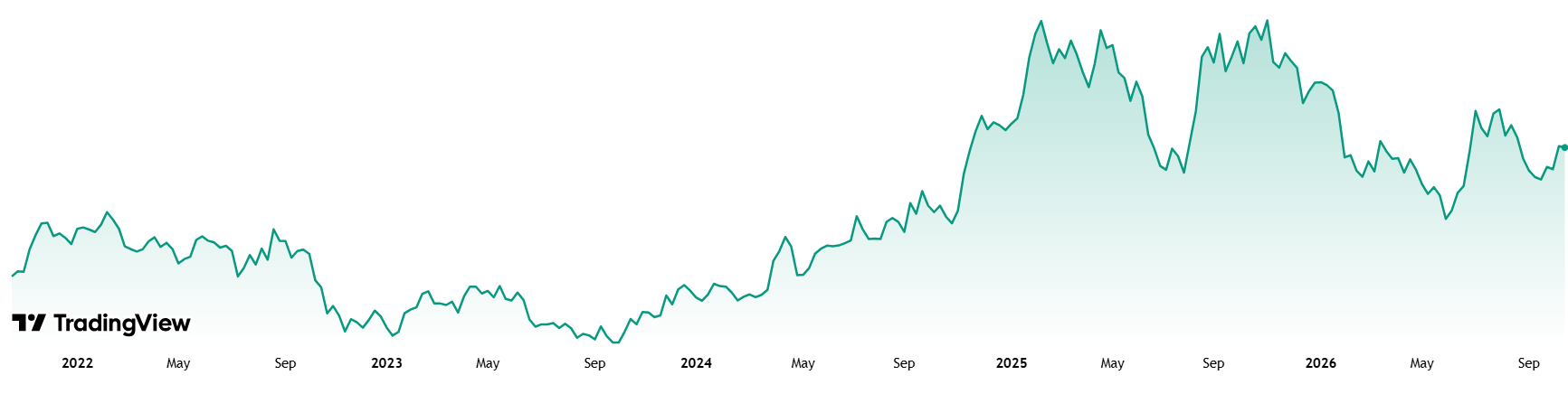
Developments in the coffee market in recent weeks show how quickly sentiment can change. The International Coffee Organization’s (ICO) price indicator fell by 8.7 % month on month in September. Greater availability of the Brazilian harvest and expectations of sufficient supply contributed to the decline. However, October trading brought renewed growth in arabica, whose futures contracts reached a monthly high in October, rising by more than 11 % over the past month. As of 22 October 2026, the contracts were valued at USD 304.50 per pound (ca. 500 g). Despite the sharp short-term rise, these contracts have lost more than 12 % since the beginning of the year, while over the past year this figure approached almost 27 %. From a long-term, 5-year perspective, futures were in positive territory, with growth of 49 %. They reached their all-time high almost a year ago in November 2025, when their price stood at USD 407.*
Source: Trading View*
Weather determines the harvest, deliveries determine availability
Brazil and the weather in its growing regions remain one of the main points of attention. According to Reuters, traders warned in October of the risk that El Niño would limit future coffee production. However, concerns about the next harvest are separate from how much coffee has already been harvested, while current weather has not brought entirely unfavourable signals. In its October report, Dutch bank Rabobank states that September rains in the Brazilian regions monitored supported flowering and plant growth. It also sees room for stocks to be replenished precisely because of the greater availability of supplies from the Latin American country. Such a development therefore suggests that it could act as a counterweight to further necessary price increases. On the exchange, however, the quality of the coffee and the time when it arrives at warehouses also matter. According to Reuters, certified arabica stocks on ICE stood at 240 767 bags in mid-October, close to the 27-year low recorded in September (217 646 bags). The ICO explains that replenishing warehouses also depends on quality, successful certification and the economic viability of deliveries. Another factor behind the development was the Brazilian real, whose strengthening was supported by October prices.
Cocoa is also balancing
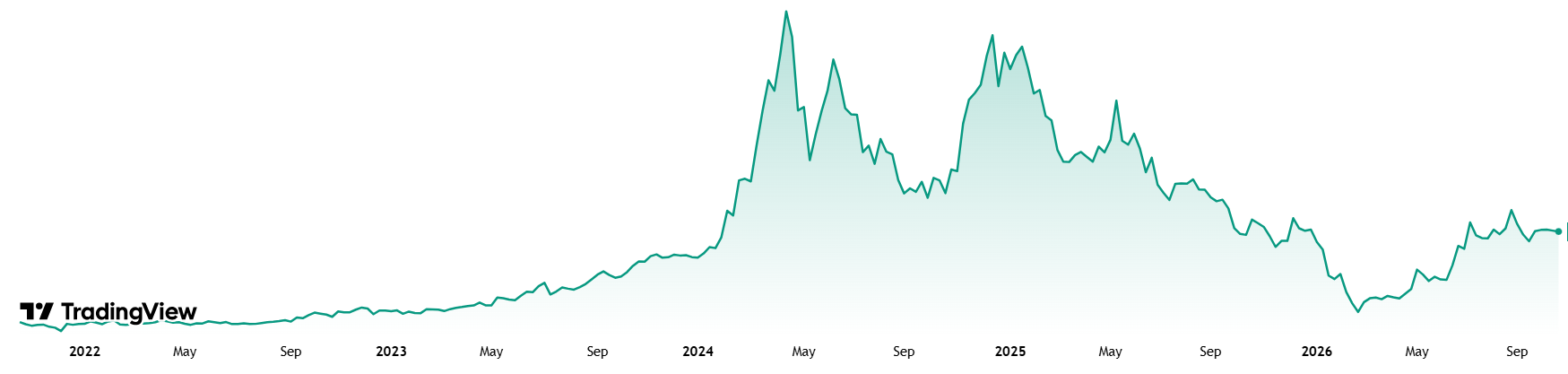
Uncertainty surrounding agricultural production is not limited to coffee. For cocoa, attention is focused primarily on West Africa. According to Reuters, exporters’ estimates suggest that approximately 37 thousand tonnes of cocoa arrived at ports in Côte d’Ivoire in mid-October. This represented a year-on-year decline of almost 56 %. Local growers warned of dry weather and the possibility that pods intended for the next harvest were damaged. However, weekly deliveries are not the same as full-season production. How quickly processors purchase the raw material also matters for prices. Reuters reported that cocoa processing volumes in the main regions monitored rose by 14.3 % in the 3rd quarter, exceeding expectations and suggesting a recovery after the previous slowdown. Cocoa contracts performed quite well on the London exchange, with their value rising by more than 6 % over the month, while falling by 3.7 % since the beginning of the year and by only 0.12 % over the year. Over the past 5 years, their price has risen by 139 %, with the high for this period reached in 2024. As of 22 October 2026, the price of the contracts was USD 5 590.*
Source: Trading View*
Manufacturers also recorded higher prices
The consequences of cost pressures are well illustrated by the results of chocolate manufacturers. For example, Switzerland’s Lindt & Sprüngli raised prices by an average of 11.8 % in the first half of the year to offset more expensive cocoa purchases. The indicator combining sales volumes and sales mix fell by 7.5 %, meaning the company’s organic sales grew by only 4.3 %. The company managed to maintain profitability, but higher prices were accompanied by pressure on demand. Sales fell by just under 1 %, while operating profit EBIT rose slightly, with an operating margin of 11.2 %. However, the situation was reflected in the outlook, which Lindt lowered in September for the second time that year. Nestlé, whose portfolio includes both coffee and chocolate products, is also responding to rising costs. In September, its management described a combination of price increases, recipe adjustments, savings and the discontinuation of products for which customers are unwilling to pay more. It mentioned raw materials, energy and transport.
Chocolate and coffee on shelves
A prolonged period of expensive inputs is also reflected in the prices of finished chocolate. According to a September analysis of data from the Statistical Office of the Slovak Republic, a 100 gram milk chocolate bar cost an average of EUR 1.49 in August 2026, compared with EUR 1.02 in October 2023. This represents an increase of approximately 46 %. Cooking chocolate rose in price from EUR 0.84 to EUR 1.46. The Czech Statistical Office, for example, reported only a month-on-month price figure for the chocolate and cocoa category for August 2026, showing a decline of 2.7 %. Price pressure has also affected cafés, with Britain’s Costa, for example, raising the prices of several drinks, including flat white by GBP 0.15, citing inflationary cost pressures. Here, however, preparation, service and the operation of the premises must also be factored into prices, and the same applies to chocolate production. For customers, however, what matters is whether any relief in commodity markets will last long enough to create room for a change in final prices as well.
* Past performance is no guarantee of future results.
[1] Forward-looking statements are based on assumptions and current expectations, which may be inaccurate, or based on the current economic environment which is subject to change. Such statements are not guaranteeing of future performance. They involve risks and other uncertainties which are difficult to predict. Results could differ materially from those expressed or implied in any forward-looking statements.
This text constitutes marketing communication. It is not any form of investment advice or investment research or an offer for any transactions in financial instrument. Its content does not take into consideration individual circumstances of the readers, their experience or financial situation. The past performance is not a guarantee or prediction of future results. Wonderinterest Trading Ltd. is a company regulated by the Cyprus Securities and Exchange Commission (CySEC).