
More output from existing power plants
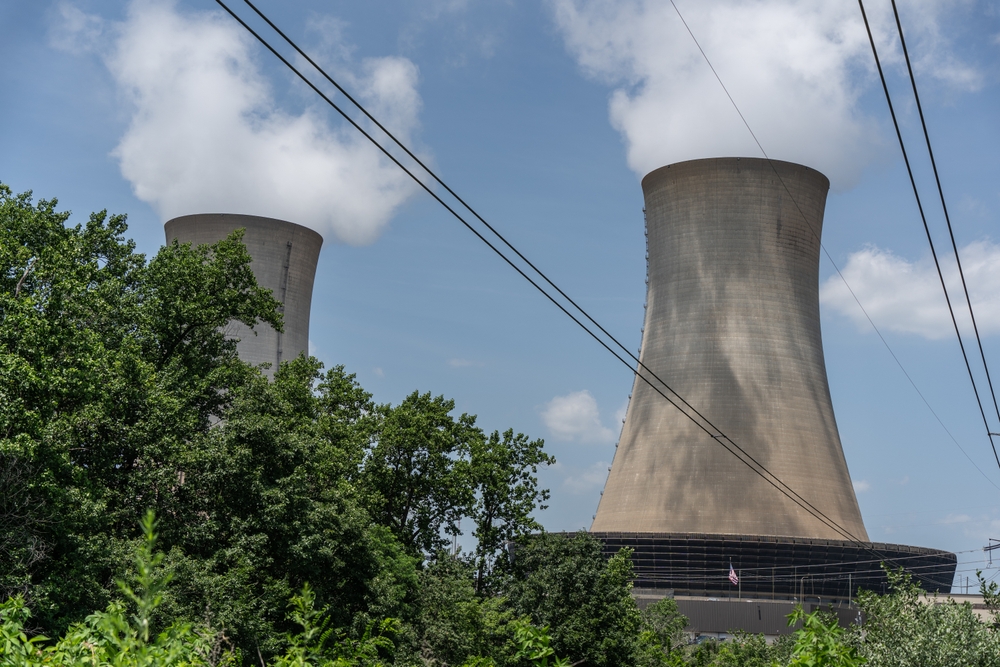
In late October, the US Department of Energy provisionally approved a 5 billion package to strengthen electricity supplies for artificial intelligence. This is a conditional loan for the energy company Constellation Energy intended to support the modernisation and uprating of 8 nuclear power plants in 3 US states, Illinois, Maryland and Pennsylvania. This would add another 1.1 gigawatts of electricity to the grid. For now, it remains a commitment, and the company must meet technological, financial, legal and environmental conditions before the agreements can be finalised. This is not Constellation Energy’s first financing, as just under a year ago, in November 2025, it secured a government loan of USD 1 billion to restart one of its power plants in Pennsylvania. The announcement was accompanied by a positive stock market reaction, and the company’s shares closed the trading day on 27 October 2026 approximately 2 % higher at USD 259. As of 29 October, they had weakened slightly to USD 258. Over the past year, the shares are in the red with a decline of more than 35 %, but looking back over the past 5 years, the company’s shares have increased in value by 473 %.*
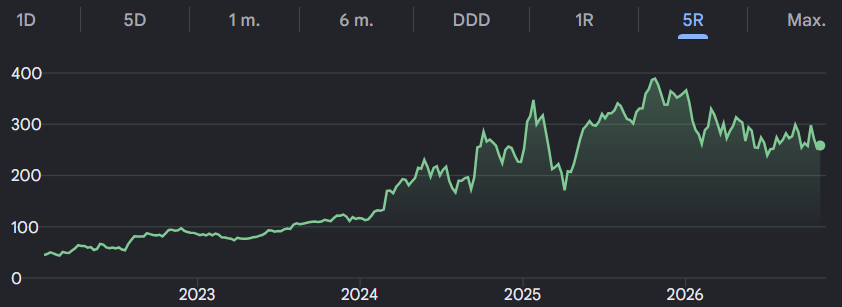
Source: Google Finance*
Seeking stable supplies
Interest in expanding capacity is also driven by rising electricity consumption, with data centres accounting for the largest share of this growth. In last year’s Energy and AI report, the International Energy Agency (IEA) estimated that global electricity consumption by data centres would rise to around 945 terawatt-hours by 2030, more than double the level in 2024. The agency identified artificial intelligence as the driving force behind this growth, as data centres also provide other digital services. Of course, whether the forecast materialises depends on developments and demand. For the energy sector, it is not only the total volume of consumption that matters, but also the geographical location, since large data centres can put pressure on the local grid even when their share of national consumption appears unproblematic. In such situations, nuclear energy is therefore an attractive solution, particularly given its low emissions footprint and the fact that it does not depend on the weather, as solar or wind power plants do. The IEA also expects renewables and natural gas to cover a significant share of demand.
Technology agreements support investment
Constellation is already translating interest from technology companies into concrete projects. The company has signed 20-year agreements with Google and Amazon, supporting investment plans worth more than USD 7 billion that are expected to add approximately 1,080 megawatts of nuclear capacity. The agreement with Meta, in turn, supports the expansion of the Clinton power plant in Illinois. According to the company, the additional electricity is intended to flow into the regional grid, which also supplies other customers. For shareholders, however, what remains decisive is how business opportunities translate into results. In the second quarter of 2026, Constellation reported adjusted operating earnings of USD 2.55 per share compared with USD 1.91 a year earlier, representing year-on-year growth of approximately 33 %. The company also attributed this to the integration of Calpine and favourable market and commercial conditions, whose contribution was partially offset by nuclear power plant outages. In August, management raised its full-year adjusted operating earnings outlook to USD 11.50 to 12.50 per share.[1]
Smaller reactors
Alongside the modernisation of existing power plants, attention is also turning to small modular reactors (SMRs). According to the US Energy Information Administration, they generally have an electrical output of up to 300 megawatts per module. The SMR concept involves assembling the reactor in a factory and installing it at its intended location, simplifying construction while also potentially allowing capacity to be added gradually as needed. The European Commission lists lower upfront investment and shorter construction times among the potential advantages, but highlights the economic viability of projects and the necessary development of the supply chain. Russia and China have already connected the first SMRs to the grid, while the European strategy aims to launch the first projects in the EU at the beginning of the next decade. Major technology companies are also already turning towards this solution, including the aforementioned Amazon, Meta and Google, as well as Microsoft and the European data centre developer Data4.
Costs and obligations remain
Even with growing demand, nuclear energy continues to entail substantial financial and environmental requirements. The EIA lists capital costs and lengthy licensing processes among the reasons that have limited the expansion of nuclear generation in the US. Project delays extend the investment period without revenue from electricity sales and can reduce returns. The UN also highlights radioactive waste management and the protection of nuclear materials in relation to SMRs. Smaller reactors therefore do not eliminate the need for safe management of spent fuel or waste-related obligations. Passive safety features can improve protection, but still require rigorous assessment and oversight. Another issue is the availability of cooling water, which depends on the technology and location. According to the OECD Nuclear Energy Agency, high water temperatures or low river levels can lead to output restrictions or shutdowns at some power plants. Such restrictions can reduce generation and thus also affect the operator’s financial performance. Stable low-emission generation therefore also entails long-term technical, environmental and financial obligations. For Constellation, growing demand from technology companies could represent an opportunity to expand generation and secure long-term sales of its energy.
This text constitutes marketing communication. It does not constitute any form of investment advice or investment research, nor an offer of any transaction involving a financial instrument. The content of this text does not take into account readers’ individual circumstances, experience or financial situation. Past performance is not a guarantee or prediction of future results. Wonderinterest Trading Ltd. is an entity regulated by the Cyprus Securities and Exchange Commission.
* Past performance is not a guarantee of future results.
[1] Forward-looking statements are based on assumptions and current expectations that may be inaccurate, or on the current economic environment, which may change. Such statements are not a guarantee of future performance. They involve risks and other uncertainties that are difficult to predict. Results may differ materially from those expressed or implied in any forward-looking statements.