

Profits Declined Significantly
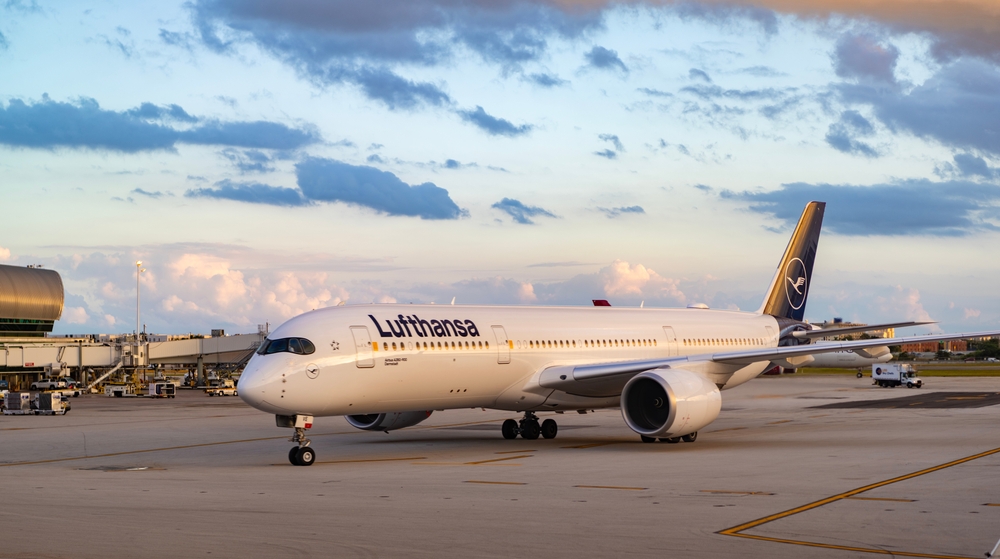
Lufthansa increased its revenue by 8% to a record EUR 11.1 billion in the second quarter of 2026 compared to the previous year. This was achieved despite reducing flight capacity by more than 3%. The company recorded particularly strong demand in the premium segment, where yields increased by 7%, while Asian routes recorded growth of more than 13%. According to Chief Executive Officer Carsten Spohr, revenues grew mainly thanks to higher ticket prices and the fact that demand for travel remains very strong. This happened despite the company offering more than 3% less capacity than a year earlier. The opposite scenario occurred in terms of profitability, as adjusted operating profit (EBIT) declined from last year's EUR 870 million to EUR 383 million, while the operating margin also decreased significantly. In addition to rising costs, profitability was negatively affected by strikes by pilots and cabin crew, which, according to the company, had a direct financial impact of approximately EUR 150 million. As part of its cost-saving measures, Lufthansa is restructuring its network and eliminating its least profitable short-haul routes, including the Lufthansa CityLine division, which could save approximately EUR 180 million, while its productivity improvement programme could generate at least EUR 1.5 billion.
Expensive Fuel
The airline's biggest problem was fuel prices, which, according to the company's Chief Financial Officer Till Streichert, increased by approximately 40% year-on-year, resulting in additional costs of around EUR 750 million. For example, Network Airlines lost EUR 658 million as a result, while higher ticket revenues managed to offset approximately 60% of this increase. The sharp increase was triggered by the conflict in the Middle East and, although prices later partially stabilised, they remain substantially higher than a year ago and the situation remains uncertain. Lufthansa estimates that fuel costs will reach approximately EUR 8.7 billion in 2026. Although the company is able to mitigate most of the risk through hedging, covering around 80% of its fuel consumption, the impacts continue to persist. The financial results were also affected by delays in the delivery of new aircraft, resulting in slower fleet modernisation and reduced efficiency. During the monitored quarter, the company took delivery of only six aircraft instead of the originally planned eleven.
Cautious Outlook
One of the strongest parts of the Group remains the Lufthansa Cargo division, whose revenue exceeded EUR 1 billion and whose adjusted EBIT increased to EUR 160 million. The division benefited primarily from growing demand for the transport of technological equipment, servers, and equipment for data centres. Lufthansa's management adopted a more cautious outlook for the full year and now expects adjusted EBIT to be in the range of EUR 1.7 to 2.2 billion[1], whereas it had previously expected a result significantly above last year's level. The company also no longer expects capacity growth, but only approximately the same flight volume as last year. Management points out that customers are increasingly booking tickets shortly before departure, reducing the predictability of demand in the second half of the year. The key risks remain further developments in fuel prices, the geopolitical situation, operational stability without additional strikes, and the development of demand for air cargo during the remainder of the year.
Sharp Correction on the Stock Market
Investors expected better results, with the outlook proving particularly disappointing, and therefore Lufthansa shares fell sharply after the publication of the company's financial results on 4 August 2026. It was one of the company's largest single-day declines on the stock market in recent years. During the trading day, the shares fell by more than 10%, closing at EUR 8.48. Despite the sharp correction, the company's shares remain in positive territory. Over the past year, they have increased by almost 14%, while from a five-year perspective they are up by 26.5%.*
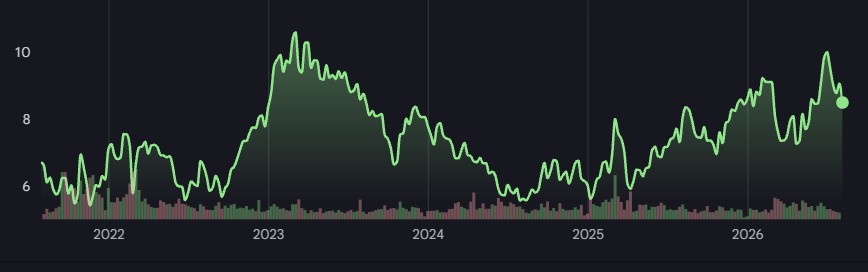
Source: Google Finance*
The Industry Faces the Same Pressure
Lufthansa's development fits into the broader picture of the aviation sector. At the beginning of June, the International Air Transport Association (IATA) warned that profitability would come under significant pressure this year due to high aviation fuel prices. The organisation expects average prices to be approximately 70% higher than in 2025, which could increase airlines' costs by around USD 100 billion. Although demand for travel remains strong, IATA believes that higher costs will limit profitability growth across the entire sector. A similar trend was confirmed by the results of competing low-cost carriers. Irish airline Ryanair reported a 34% decline in net profit to EUR 538 million for the first quarter of fiscal year 2027, as passengers postponed bookings due to uncertainty related to the conflict in the Middle East and higher fuel prices. The company warned that financially weaker European airlines face a challenging winter season. Hungarian airline Wizz Air, in its results for the first quarter, pointed to a gradual improvement in operations, while also confirming that high fuel prices and geopolitical risks remain significant obstacles to further growth. The company will publish its second-quarter results on 6 August 2026.
* Past performance is not a guarantee of future results.
[1] Forward-looking statements are based on assumptions and current expectations that may prove to be inaccurate, or on the current economic environment, which may change. Such statements are not a guarantee of future performance. They involve risks and other uncertainties that are difficult to predict. Actual results may differ materially from those expressed or implied in any forward-looking statements.
This text constitutes a marketing communication. It does not represent any form of investment advice or investment research, nor does it constitute an offer of any transaction involving a financial instrument. The content of this text does not take into account the individual circumstances of readers, their experience, or their financial situation. Past performance is not a guarantee or prediction of future results.



.svg)
.svg)