

A nagy- és kis kapitalizációjú vállalatokat egyaránt magában foglaló STOXX Europe 600 index már egy ideje a 600 pontos szint felé közeledett. Ezt a mérföldkövet 2026. január 5-én, hétfőn, röviddel az európai piac zárása előtt sikerült átlépni. Nem kellett sokáig várni, hogy az új év következő kereskedési napján új rekordot állítson fel 605 pont felett. Bár az index kissé visszahúzódott a csúcsértékektől, pozícióját megőrizte, és 2026. január 7-én 604,99 ponton zárta a kereskedési napot. Ez a 2025-ben tapasztalt növekedés folytatódását jelenti, amikor az index több mint 17%-kal emelkedett. Tavaly az index csak áprilisban jegyzett jelentősebb korrekciót. Az elmúlt öt évben ez 47%-os érték növekedést jelent.*
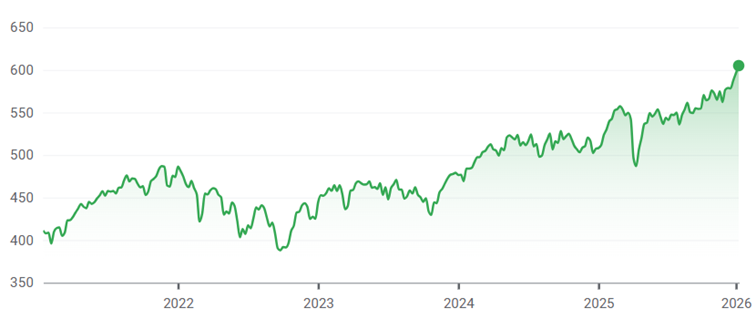
Forrás: Google Finance*
Rekordok Európában
Hasonló alakulást mutattak az európai többi főbb referenciaindexek is, amelyek január elején saját rekordjaikat döntötték meg. A legfigyelemreméltóbb a német DAX-index teljesítménye, amely átlépte a szimbolikus 25 000 pontos küszöböt, és 2026. január 7-i kereskedés során egészen 25 122 pontig emelkedett. Az Egyesült Királyság FTSE-indexe, amely szintén a 10 000 pontos pszichológiai szint felett járt, más indexekkel – például a francia CAC-kal, a spanyol IBEX-szel és a páneurópai STOXX 50-nel – együtt ugyanazon a napon visszahúzódott az előző nap elért csúcsokról. E fejlemény ellenére minden referenciaindex, beleértve a DAX-ot is, hosszú távú szempontból továbbra is pozitív tartományban maradt.*
https://www.google.com/finance/quote/DAX:INDEXDB?window=5Y
https://www.google.com/finance/quote/UKX:INDEXFTSE?window=5Y
https://www.google.com/finance/quote/PX1:INDEXEURO?window=5Y
https://www.google.com/finance/quote/I:INDEXBME?window=5Y
https://www.google.com/finance/quote/SX5E:INDEXSTOXX?window=5Y
A DAX, FTSE, CAC, IBEX és STOXX 50 indexek árfolyamainak alakulása az elmúlt öt évben. Forrás: Google Finance*
Problémák az USA-ban, esetleg Európában is?
Az európai piacok pozitív teljesítményét a latin-amerikai geopolitikai zavarok is támogatták. Január első hétvégéjén az amerikai fegyveres erők megtámadták Venezuelát, és elfogták az ország elnökét, Nicolás Madurót, valamint feleségét. Őket kábítószer-kereskedelemmel vádolják, állítólag az olajeladásokból származó pénzeszközök felhasználásával, ami már tavaly év vége felé is fokozni kezdte a feszültségeket. A helyzet különösen kedvezett a védelmi szektor vállalatainak részvényeinek, amelyek erőteljes emelkedést mutattak. Donald Trump amerikai elnök kijelentette, hogy az ország az Egyesült Államok „igazgatása” alá kerül, ezt a kijelentést azonban később a külügyminiszter enyhítette, aki a CNBC-nek azt mondta, hogy a cél csupán politikai célok elérése volt. A tőzsdei emelkedést tovább erősítették azok a hírek, miszerint Trump ismét igényt tart Grönland területére. Erre válaszul a Fehér Ház szóvivője a CNBC-nek elmondta, hogy az Egyesült Államok különböző lehetőségeket fontolgat a dán terület megszerzésére, beleértve a katonai erő alkalmazását is. Dánia azonnal reagált, bejelentve, hogy megkezdi Grönland felfegyverzését, ugyanakkor reményét fejezte ki az Egyesült Államokkal való sikeres együttműködés iránt.
Érdeklődés Európa iránt
Érdemes megjegyezni, hogy a piac emelkedését nem befolyásolta jelentősen egyetlen jelentős hír sem. Ez arra utalhat, hogy a befektetők az európai részvények felé fordulnak, mert azokat vonzónak tartják, és egyre nagyobb bizalmat táplálnak e piac iránt. Egy másik fontos tényező, hogy az amerikai piac – különösen a technológiai szektor – a mesterséges intelligencia miatt túlértékelt. Ezzel szemben az európai technológiai vállalatok rendkívül versenyképesek, és az egyes részvények értékelése gyakran alacsonyabb. Emellett érdemes megjegyezni, hogy az infláció tavaly csökkent, és az EKB többször is csökkentette a kamatlábakat. Ezen felül az EKB az új évben az euróövezet növekedését az eredeti 1%-ról 1,2%-ra emeli.
Bizalom a folyamatos növekedésben
Az euróövezet növekedését a Goldman Sachs is várja, amelynek előrejelzései az alacsonyabb infláció, a magasabb fogyasztói kiadások és az alacsony munkanélküliség által vezérelt fellendülésre utalnak. A bank szerint a növekedést támogatni fogják a megnövekedett védelmi kiadások, amelyekről már tavaly óta folynak a tárgyalások. Várhatóan Európa egyik legnagyobb gazdasága, Németország is védelmi célú fiskális ösztönzőket és támogatásokat fog bevezetni. Jelentésében a bank említi a vámpolitika csökkent hatását is, mivel a történelmi adatok azt mutatják, hogy az amerikai export csökkenését ellensúlyozta a világ más részeibe irányuló export. A bank azonban arra figyelmeztet, hogy bár növekedésre számít, annak potenciálja alacsonyabb, és továbbra is fennállnak a Kínából származó kockázatok, különösen az ország exportja, amely zavart okoz az ókontinensen belüli versenyben. Ezen kilátások alapján a Goldman Sachs felülvizsgálta az STOXX 600 indexre vonatkozó növekedési előrejelzését, és most azt várja, hogy az index a korábbi 615 pontról 625 pontra emelkedik. [1]
*A múltbeli teljesítmény nem garantálja a jövőbeli eredményeket.*
[1] A jövőre vonatkozó kijelentések olyan feltételezéseken és jelenlegi várakozásokon alapulnak, amelyek pontatlanok lehetnek, illetve a jelenlegi gazdasági környezeten, amely változhat. Az ilyen kijelentések nem garantálják a jövőbeli teljesítményt. Kockázatokkal és egyéb, nehezen előre jelezhető bizonytalanságokkal járnak. A tényleges eredmények lényegesen eltérhetnek a jövőre vonatkozó kijelentésekben kifejezett vagy sugallt eredményektől.



.svg)
.svg)