


At a several-month high
August was marked by sharp movements in the sugar market that were last recorded more than a decade ago. Sugar futures contracts rose by 25 % during the month, with such a development last recorded in 2010, when the increase was 24 %. The contracts reached their more than one-year high on 2 September 2026 at USD 18.70 per pound (0.5 kg). As of 9 September 2026, the value had slightly declined to USD 18.07, however, since the beginning of the year, the contracts have gained more than 19 % and have thus outperformed the S&P 500 index. Despite such a sharp development, the price did not reach the highs from 2023, when it surpassed the USD 27 mark.*
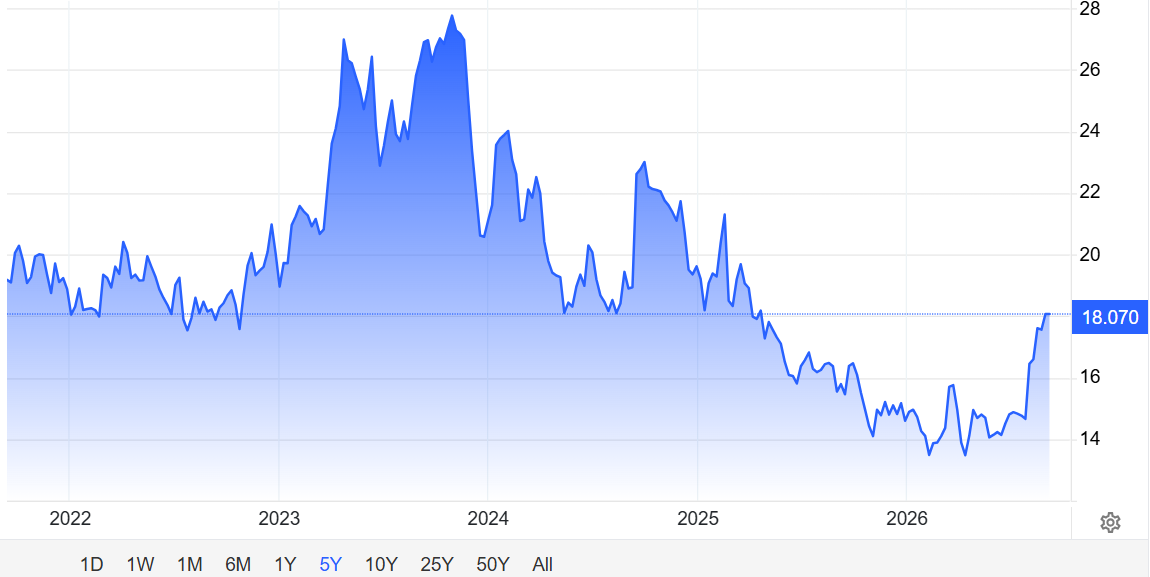
Source: Trading Economics*
El Niño arrives at the worst possible time
One of the main causes of the price increase was extreme weather in Europe, which damaged the sugar beet crop and which, according to analysts, is the most important short-term factor. According to them, the main risk in the coming months is the development of the El Niño climate phenomenon, which could affect several major growing regions. While excessive drought during the growing season reduces sugarcane yields, excessive rainfall, on the other hand, complicates harvesting and reduces the sugar content of sugarcane. Brazil, India and Thailand together account for approximately 70 % of global sugar exports, meaning that adverse weather in all three countries at the same time could bring major restrictions. For example, India is already experiencing the first problems, while continued droughts could discourage farmers from growing a crop that requires large amounts of water. Insufficient rainfall is also expected in Thailand. The World Meteorological Organization has also warned of a strengthening El Niño, and its effects could persist until February 2027. Surface temperatures in some parts of the Pacific Ocean were more than 2 °C above normal in July, and by mid-August the temperature had increased to 2.2 to 2.6 °C. UN Secretary-General António Guterres warned that we are in a dangerous zone of extreme weather.
Expected shortage
The consequence is a reduction in estimates and an increase in the market deficit. One example is the European Union, which estimates that sugar production will fall from 16.6 million tonnes to 13.4 million tonnes in the 2026/2027 marketing year, representing a decline of 19 %. Citi experts estimate the deficit at 1.3 million tonnes, while Green Pool Commodity Specialists are working with as much as 3.2 million tonnes. Although the difference between the estimates is significant, the key conclusion is a shortage of sugar on the market. Concerns are also emerging in Asia. Thailand may produce less than 10 million tonnes of sugar, which would represent a decline of about 17 % from the 12 million tonnes produced in the previous season. Representatives of Thai Sugar Millers Corp. warned that the situation in the country could be significantly worse than in previous years. The problem is the aforementioned lack of rainfall in the northeast of the country, which accounts for approximately 45 % of total sugar production. In response to lower production and rising prices, the Indian government has allowed duty-free imports of up to 1 million tonnes of raw sugar. This is a significant step that underlines the seriousness of the situation, as such an exemption was last granted in the 2017/18 season. The country is also restricting exports, which may reduce the amount of sugar available.
Brazil may prioritize ethanol
Brazil remains crucial to the global market, as it accounts for approximately half of global exports. However, producers do not have to process all sugarcane into sugar and may also switch to ethanol production depending on price developments. When the price of oil rises, the production of this liquid therefore becomes more attractive. The American Sugar Alliance warns that when oil prices are above USD 90 per barrel, the incentive for countries producing ethanol from sugar is much higher. Brazil also strongly supports production. The situation could be worsened by developments in the corn market, which is also used to produce ethanol, and could therefore increase pressure to use sugarcane in this process. Brazilian farms have also faced rainfall in recent times, which has slowed harvesting. The current rise in sugar prices is the result of several problems that have emerged in the market at the same time. If adverse weather and a strong El Niño lead to a further decline in production, pressure on sugar in the commodity market could continue in the coming months.
* Past performance is not a guarantee of future results.
This text constitutes marketing communication. It does not constitute any form of investment advice or investment research, nor an offer of any transaction involving a financial instrument. The content of the text does not take into account the individual circumstances of readers, their experience or financial situation. Past performance is not a guarantee or prediction of future results.



.svg)
.svg)