

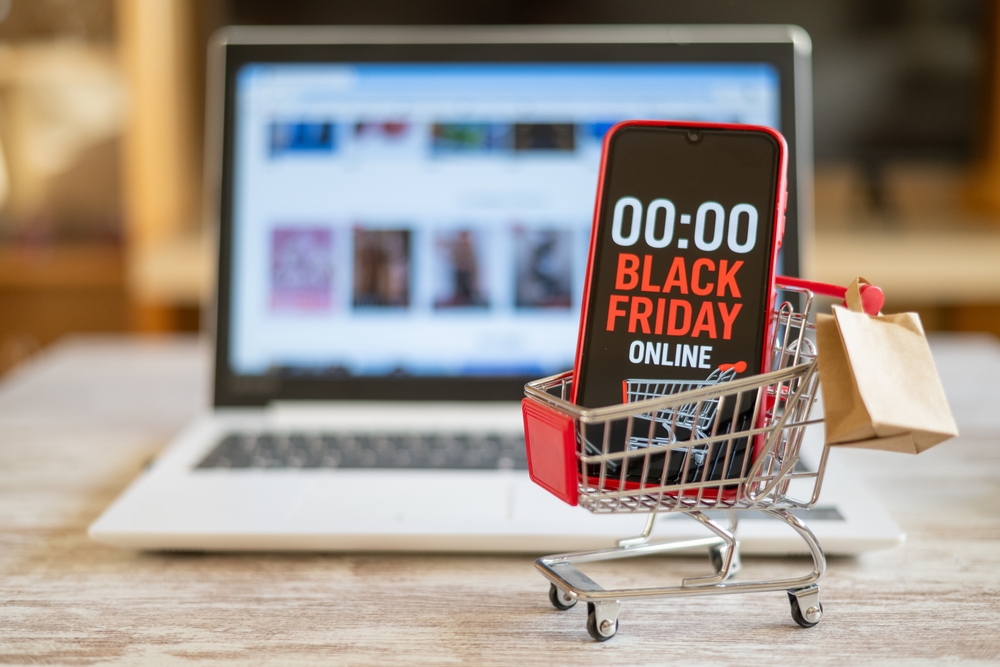
As every year, American consumers were looking forward to the last days of November and the discounts they bring. During the period from Thursday to Monday (Nov. 27 – Dec. 1, 2025), total sales reached 41.1 billion USD, representing a 7.7% change compared to 2024. According to Adobe Analytics, however, this represents a slowdown, as last year’s spending was more than 8% higher. In addition, total sales were lower than estimates of nearly 44 billion USD.
Revenues at historic highs
According to Adobe data, most online purchases on Black Friday occurred between 10:00 a.m. and 2:00 p.m. local time, with more than 12 million USD spent every minute. Americans spent a record 11.8 billion USD in a single day, representing a 9.1% increase compared to last year. On top of that, more than 6 billion USD was spent on Thursday, during Thanksgiving Day. On the other hand, data from Salesforce estimates that Friday revenues reached up to 18 billion USD, including, for example, groceries. Globally, Salesforce estimates this could reach up to 79 billion USD, while the e-commerce platform Shopify recorded global sales of 6.2 billion USD. The most popular categories were traditionally electronics, gaming consoles, home appliances, toys, clothing, and cosmetics. Shopping does not end with Black Friday, it continues throughout the weekend and culminates on Monday, known as Cyber Monday. Strong sales also hit this day, reaching 14.25 billion USD.
Online dominates, offline in the background
In recent years, online shopping has come to the forefront, with its revenues increasingly surpassing those from physical stores. According to Adobe, online sales accounted for more than half of total sales. As CBS News reports, data from RetailNext analysts showed that on Friday, foot traffic in physical stores fell by 3.6% year-on-year, milder than the 6% drop during previous days. According to RetailNext, this decline is driven by changes in the time, manner, and purpose of shopping. MasterCard SpendingPulse reported more than a 10% increase in online sales compared to less than 2% growth for offline stores. In addition to convenience, the adoption of artificial intelligence (AI) helps e-shops make shopping easier and faster. Adobe also points to its positive impact, showing that traffic to AI-powered sites grew 805% year-on-year, while Salesforce reports that the use of AI models contributed up to 14 billion USD to global revenues. On Monday, traffic to such e-shops increased by 670%.
Economic challenges slow spending
At first glance, it may seem that Americans can afford to spend more, but the reality is slightly different. The US faces several economic challenges, including unemployment, which was at a 4-year high in September, low consumer confidence, a 3% annual inflation rate, and prices in stores that are 7% higher. These indicators are closely linked to trade policy. On the other hand, wages remain strong. According to Reuters, while discounts were high again this year, higher price tags reduced their “effect.” Americans bought less merchandise – 2% less per transaction compared to 2024 – and the number of orders also fell by 1%. The combination of these factors along with discounts is leading to higher interest in short-term loans or “buy now, pay later” options. It will be interesting to track data in the coming year, after the holiday season ends. The National Retail Federation estimates that Americans will spend up to 1 trillion USD in the last two months of the year, which would indicate a slowdown. In 2024, the growth rate was 4.3%, but this year it is expected to be 4.2%.[1]
European Black Friday not just on Friday
While in the US this discount festival lasts only five days, in Europe retailers try to attract customers much earlier, with discounted prices lasting longer and Black Friday posters replaced only by Christmas ones. For example, brands like Tommy Hilfiger, GUESS, and others started offering discounts at the end of October, and GAP offers discounted merchandise until Christmas. During this period, brands must not only correctly set their strategies and timing but also follow trends to know which products to discount. According to Retviews, these include wallets, handbags, jeans, and denim jackets. Sales events also impact not only retailers but also delivery companies. For example, according to its press release, German DHL processed the most packages in a single day in its history – 12.4 million items. For comparison, DHL normally processes only 6.7 million items per day.
[1] Forward-looking statements are based on assumptions and current expectations, which may be inaccurate, or on the current economic environment, which may change. Such statements are not a guarantee of future performance. They involve risks and uncertainties that are difficult to predict. Results may differ materially from those expressed or implied in any forward-looking statements.


.svg)
.svg)