

Solid growth
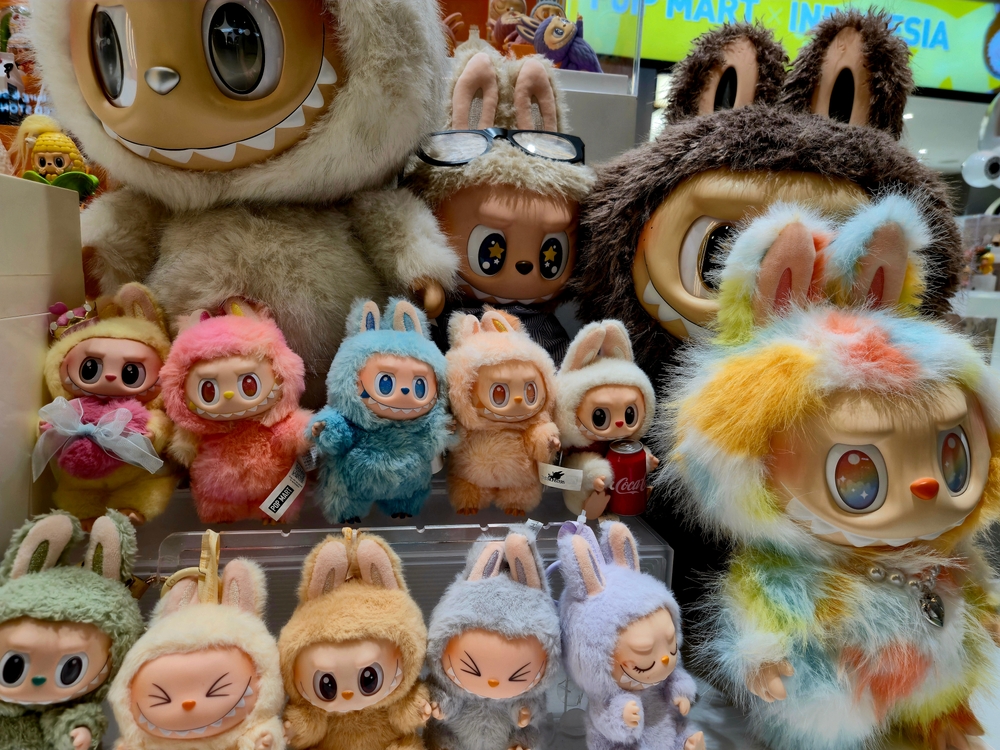
Pop Mart entered 2026 with triumphant results, but the market reaction was surprisingly cold. According to data, the company recorded sharp growth in 2025, with revenues increasing year-on-year by about 185% and net profit by more than 300%. In terms of comparison with market consensus expectations, revenues were slightly lower (37.1 billion CNY vs. estimated 38 billion CNY), while profit was higher (12.8 billion CNY vs. 12.6 billion CNY). The main driver was the famous Labubu toy from The Monsters family, whose sales contributed more than 14 billion CNY, representing a 38% share of total revenues. Toys from other brands such as Skullpanda, Twinkle, Twinkle and Hirono were sold in total for just over 7 billion CNY. While the results confirm that demand for the products was strong, the company is more or less dependent on a single product, which increases sensitivity to changes in demand, as happened in this case.
Declining interest?
The end of last year brought the first signs of cooling interest in Labubu, with several factors coming into play. According to a Reuters report from October last year, one of them is market saturation after Pop Mart significantly increased production. This led to a decline in prices on secondary markets, and such a development may in the future lead to the loss of exclusivity associated with these toys. The character, known for its distinctive cute-creepy design with a wide toothy smile, gained popularity mainly due to the sales style in so-called blind boxes. When purchasing, the customer does not know which figure they will get, which encourages repeat purchases. However, this very sales model may lose momentum if consumers begin to pay more attention to their spending. CNBC also reports that investors have started to become sceptical about further growth. The company itself, however, claims that the situation arose due to higher supply rather than a drop in demand.
Sharp correction
This uncertainty was also reflected in the stock market, when on March 25, 2026, investors pushed Pop Mart shares down by more than 30%. According to CNBC, however, this is also due to standard position unwinding and a reduction in the dividend payout ratio. While it was 35% in 2024, in the past year it was only 25%. However, the company’s shares remain in positive territory in the long term. The biggest growth was visible in 2025, when Labubu became a global phenomenon, pushing Pop Mart’s share price to an all-time high of 322 HKD. Since that peak, however, the shares have fallen by 50%. Over the past year, they maintained about 7% growth, while over the past 5 years it was a 180% increase.*
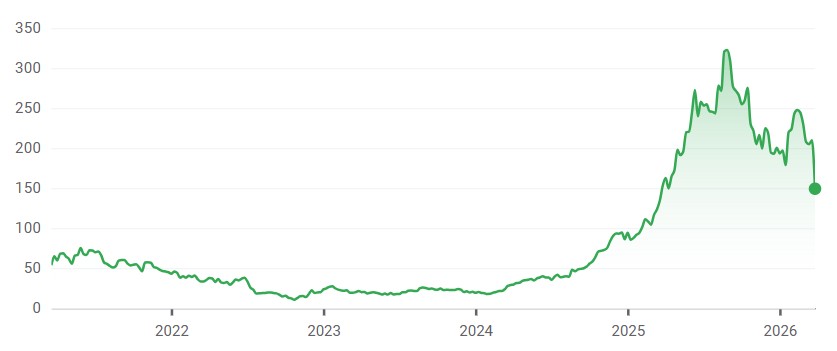
Source: Google Finance*
Searching for new impulses
In response to these concerns, Pop Mart is trying to convince the market that Labubu is not just a “one-off” and that its business model has a broader foundation. Key are investments in intellectual property, similar to various franchises in the entertainment industry. According to CNBC reports, the company should cooperate with film studio Sony Pictures and bring a movie about Labubu characters to cinemas. At the same time, it is expanding its product portfolio, for example in cooperation with clothing brands Uniqlo and Moynat or with a jewellery offering. A significant project is the Pop Land amusement parks, which according to CNBC are a “huge dream” for Pop Mart’s COO, Si De, with one currently undergoing reconstruction in Beijing, China. An important part of the strategy is also global expansion, especially into Europe and the USA, through which the company aims to strengthen its presence abroad and increase the share of international revenues. However, the question remains whether it will be possible to replicate Labubu’s success with other characters, as investors expect the company to be able to create another global hit. According to the company itself, however, Labubu should remain the driving force, with expectations of 20% growth in the coming period. [1]
Reputational risk on the horizon?
Another factor is entering the picture that may affect the company’s reputation and have regulatory consequences. According to Yahoo Finance, allegations have emerged that forced labour is used in the production of Labubu. These reports come at a time when more than one Chinese company has been accused of such practices, and regulatory authorities in the West are therefore particularly cautious. If these reports were confirmed, it could have consequences for the brand and its expansion into Western markets. In addition to legal risks, it is also a matter of reputation, which is crucial in the consumer goods segment. Customers, especially from the younger generation, are sensitive to ethical issues and may change their purchasing behaviour. The company is currently trying to mitigate these concerns, but the market will closely monitor further developments.
* Past performance is not a guarantee of future results.
[1] Forward-looking statements are based on assumptions and current expectations that may be inaccurate, or on the current economic environment, which may change. Such statements are not a guarantee of future performance. They involve risks and other uncertainties that are difficult to predict. Results may differ materially from those expressed or implied in any forward-looking statements



.svg)
.svg)