

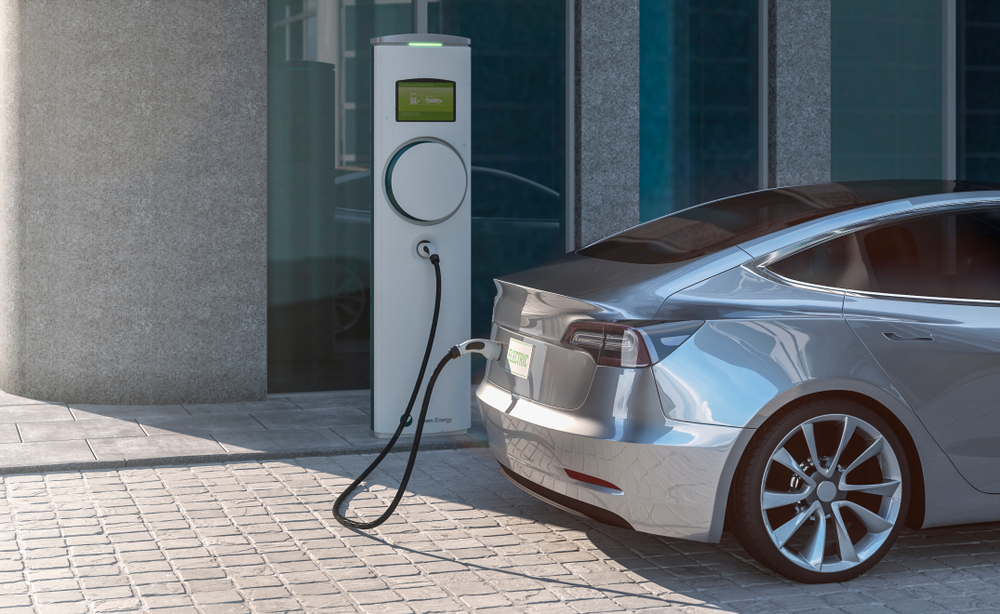
The business strategies of Chinese car manufacturers have been changing in recent years, and these brands are becoming increasingly visible in our markets as well. Behind this are enormous foreign investments, which exceeded USD 100 billion between 2019 and 2025. During the same period, foreign investments in electric mobility by, for example, American automakers amounted to only about USD 38 billion. The turning point came in 2021, when the investment trend began to shift and China started to outperform its American competitors. Asian automakers have been forced to take this step because of the situation in their domestic market. Massive production capacity and an aggressive price war are putting pressure on profits. Moreover, foreign markets allow Chinese manufacturers to offer various types of electric vehicles, especially affordable models. According to CNBC, analysts also pointed out that in the first three months of this year, sales of Chinese cars across 86 monitored markets increased by more than half, with this growth driven mainly by economies in Australia and Europe. Interestingly, Chinese vehicles account for 80% of all EV sales in Latin America.
Investments Instead of Exports
Manufacturers such as BYD are gradually trying to build a position similar to that once held by traditional automotive groups. Chinese brands are able to capture a share of the market thanks to their large production volumes, the development of a global supply chain, and, of course, long-term investments. Last but not least, trade barriers in the form of restrictions and tariffs, aimed at protecting domestic automotive industries, have also entered the equation. This is why relocating production closer to customers is so important. One example is the aforementioned BYD, which is building a factory in Szeged, Hungary. According to analysts, this is giving rise to a new form of industrial diplomacy, in which investments in factories simultaneously create economic and political ties between China and host countries.
Is Europe Losing Momentum?
As mentioned, traditional automakers are experiencing the greatest pressure. For example, European giants such as Volkswagen, Mercedes, BMW, and Porsche recorded significant declines in sales in China during the second quarter of 2026, ranging from 30% to more than 40%. Volkswagen alone suffered a 36.6% decline in vehicle deliveries in the country. These developments led to an almost 9% decline in the group's global sales, despite the company growing faster in Europe and the United States. Thanks to the efficiency and competitiveness of China's automotive sector, foreign competitors now have to fight much harder for customers. The situation has also forced Volkswagen into a major restructuring, and according to CEO Oliver Blume, the company may have to reduce its workforce by another 50,000 employees. Combined with the cuts already planned, the total number of eliminated positions could reach as many as 100,000. According to the company's management, the reason is its cost disadvantage compared to competitors. The future of some factories in Germany beyond 2030 is also uncertain, and the company is considering alternatives such as producing Chinese models for the European market or repurposing facilities for other industries.
Used Electric Vehicles Are Attracting Attention Again
China's expansion comes at a time when consumers are looking for more affordable alternatives, which is why a significant shift is also visible in the used electric vehicle market. In the United States, sales of used EVs increased by 24% compared to the previous year, with Tesla, Hyundai, and Chevrolet models accounting for the largest share. The average wholesale price of a used EV increased by 11.5% in June, while the Manheim Used Vehicle Value Index for EVs rose by 12% year-on-year during the same period, compared to only a 1.7% increase for other vehicles. Demand has also been supported by high fuel prices, particularly following the outbreak of the conflict in Iran. The growing interest in used electric vehicles shows that consumers are increasingly considering not only the environmental but also the economic aspect. Such vehicles are often up to 40% cheaper than new models, making them more accessible to a broader group of customers.
Europeans Are Looking for a More Cost-Effective Alternative
A similar trend has also emerged in Europe, where the average gasoline price in the EU increased by 12% to EUR 1.84 per liter between February 23 and March 16, 2026, according to data from the European Commission. This led to increased demand for used EVs on certain platforms. For example, French retailer Aramisauto reported that used EVs accounted for a 12.7% higher share of its total sales. OLX stated that demand in France increased by 50%, by 40% in Romania, by 54% in Portugal, and by 39% in Poland. Meanwhile, the German platform mobile.de reported an increase from 12% to 36%. This trend has also been accelerated by energy uncertainty and improved tools that help customers assess battery condition. It can therefore be expected that the share of electric vehicles on our roads will continue to increase. On the other hand, if fuel prices were to fall again, some consumers could return to traditional vehicles.
This text constitutes marketing communication. It does not represent any form of investment advice, investment research, or an offer to enter into any transaction involving a financial instrument. The content of this text does not take into account the individual circumstances, experience, or financial situation of readers. Past performance is neither a guarantee nor a prediction of future results.


.svg)
.svg)